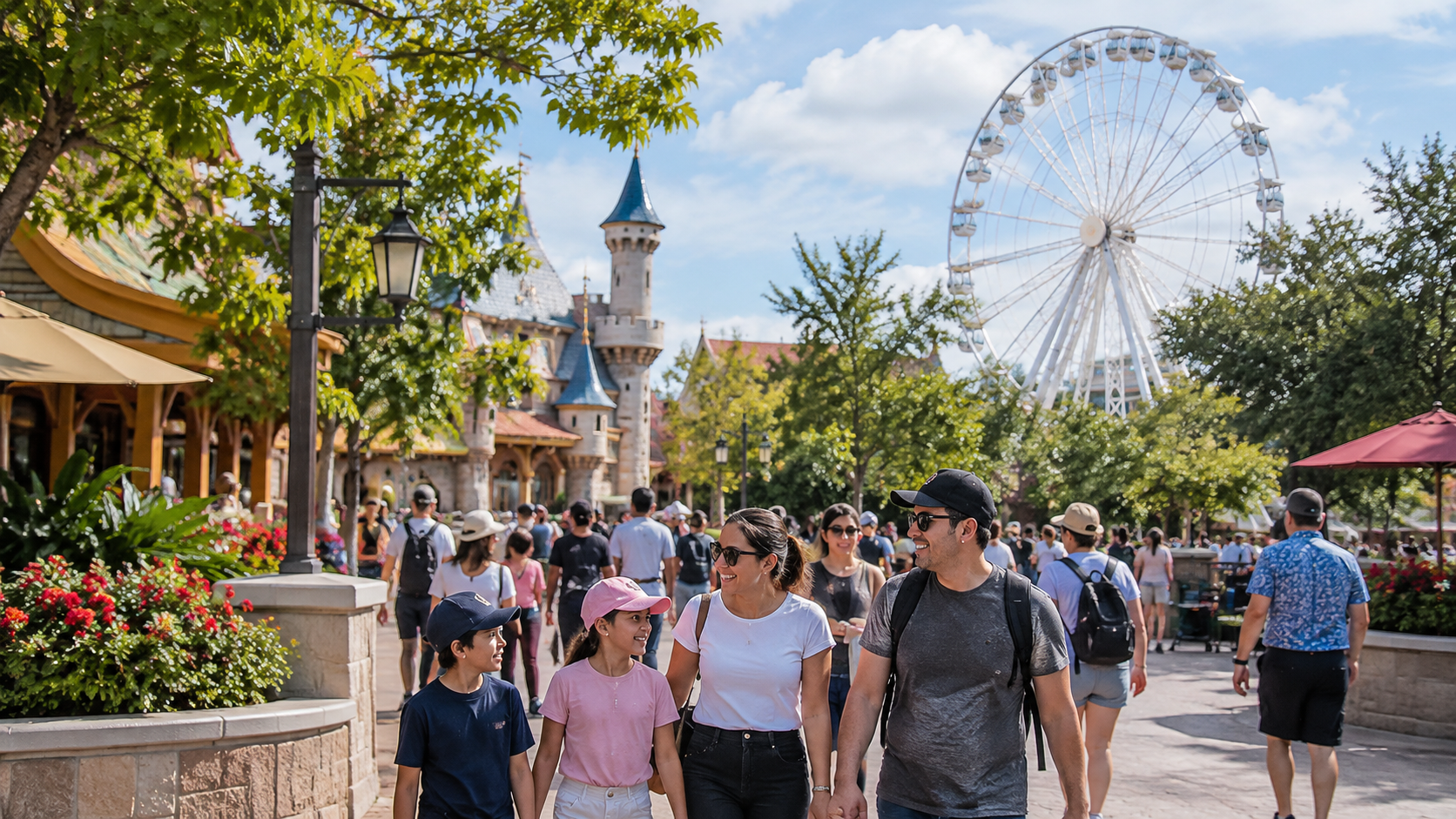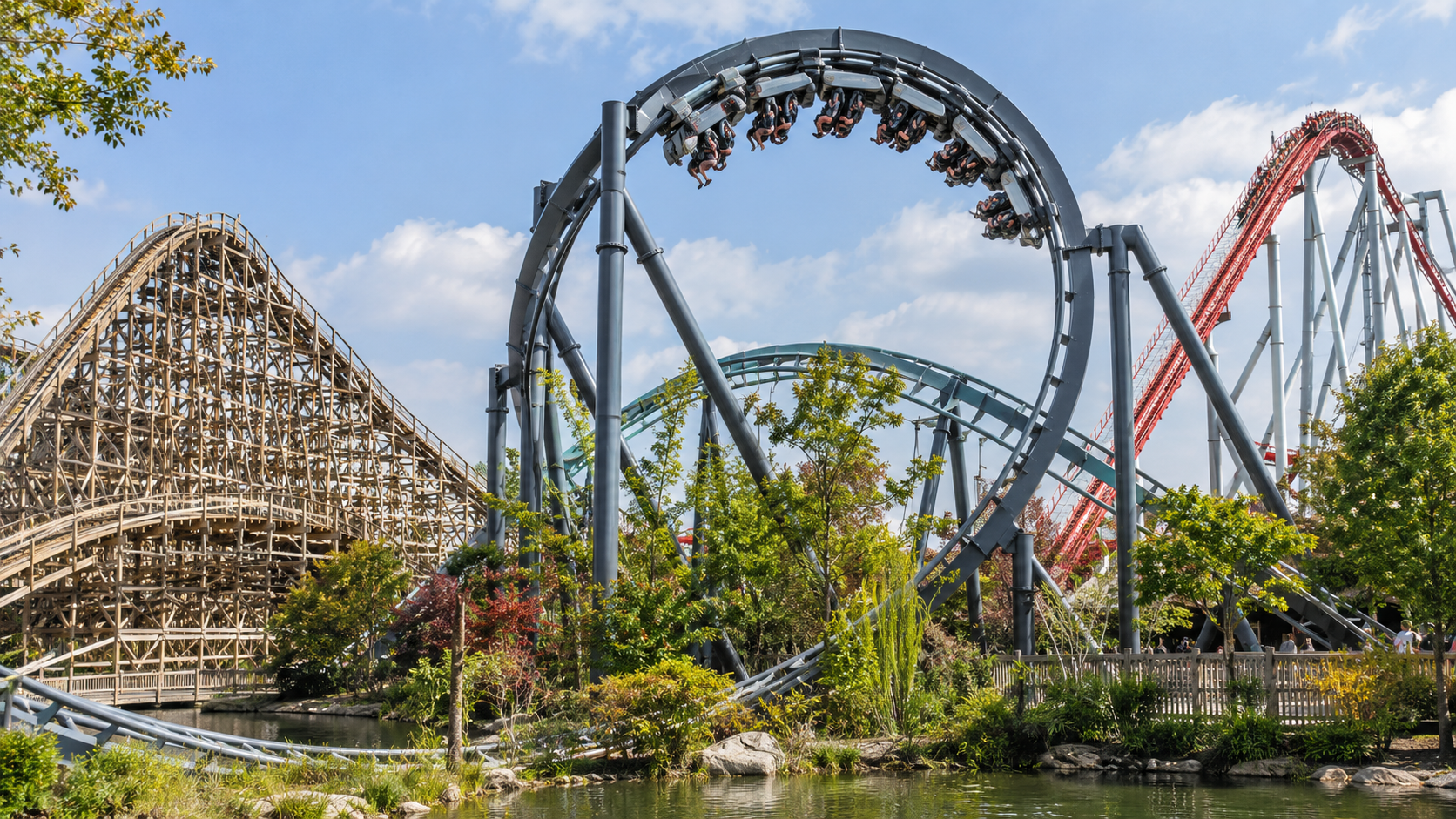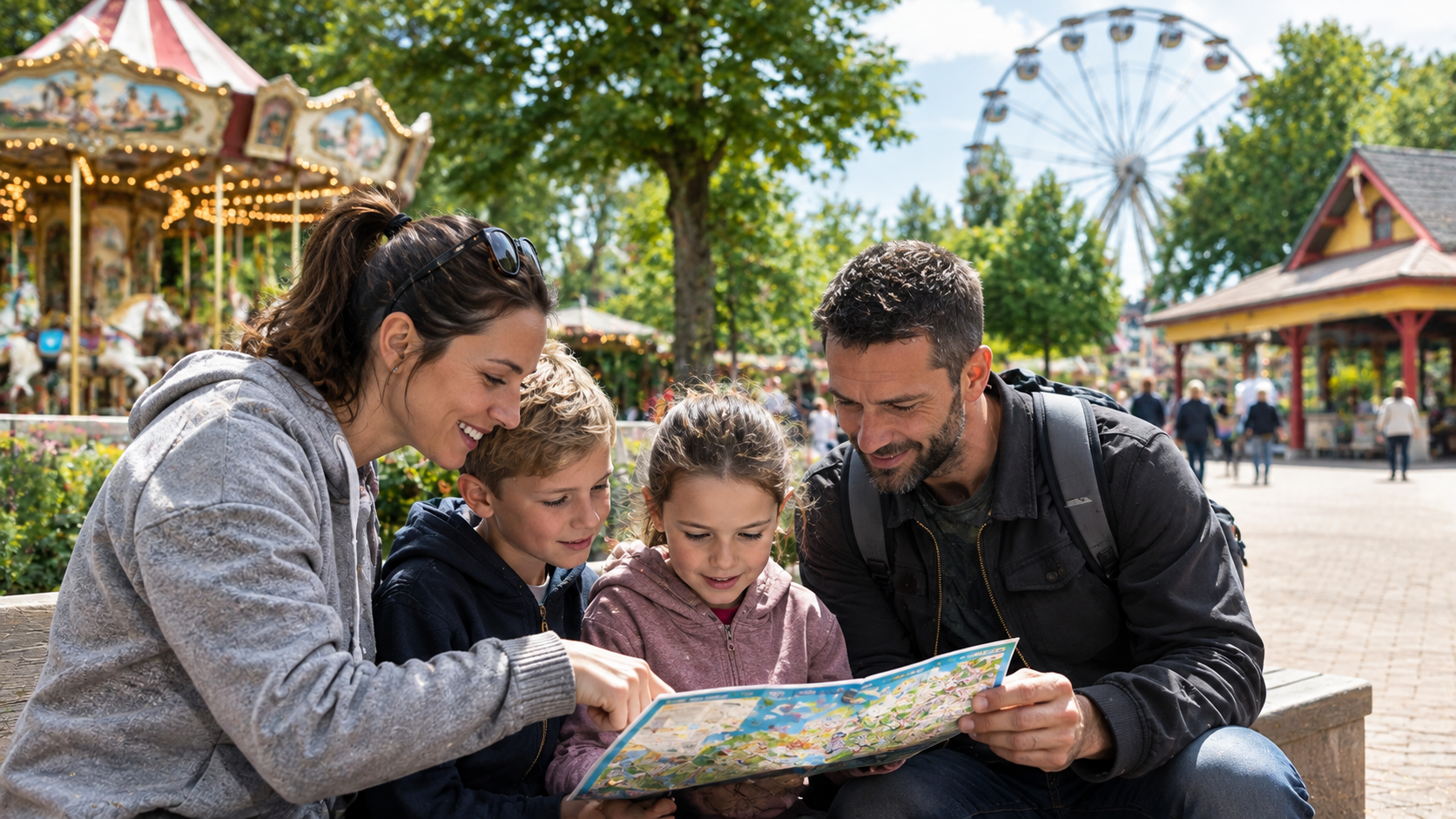
At Tokyo Dome City Attractions, a visitor can step into an amusement area in central Tokyo, choose a ride and continue exploring the city. At Germany’s Europa-Park, more than 100 attractions and shows are spread across 21 themed areas. Both are amusement experiences, but the time and planning they invite are strikingly different.
The distinction between a large theme park and a smaller amusement park goes well beyond physical size. Ride selection, the layout of the grounds, ticketing and the surrounding destination can all shape the visit.
A bigger park offers more choice, not unlimited time
Large theme parks can bring roller coasters, family attractions, indoor experiences, shows and elaborate themed environments together in one destination.
Europa-Park, for example, lists 14 roller coasters alongside attractions for different ages and interests. Its themed areas draw on European architecture, culture and storytelling, making the spaces between rides part of the experience.
That breadth creates opportunities, but also decisions. Visitors may need to prioritize certain attractions, allow time for travel between areas and accept that one day might not be enough to explore everything they would enjoy.
Smaller parks can offer a more concentrated selection. Rather than treating a limited ride count as a disadvantage, visitors can consider whether those rides genuinely suit their group.
A compact park with several appealing experiences may be a better match than a vast destination where many headline attractions are unsuitable for younger children or unappealing to the rest of the party.
Walking distances can change the entire day
A sprawling park usually requires more movement between attractions, restaurants and entertainment areas. Choosing a sensible route can reduce unnecessary walking, especially when visiting with children or someone who needs frequent breaks.
A smaller layout may allow visitors to revisit favorite rides more easily or adjust plans without crossing a huge property.
But compact does not automatically mean accessible. Gradients, surfaces, transportation links and attraction access policies all matter. Visitors with mobility requirements should consult the accessibility information of the individual park rather than relying on its size.
An urban amusement area offers another possibility. Tokyo Dome City Attractions sits among shops, restaurants and other leisure facilities. Tokyo’s official tourism guide highlights its Thunder Dolphin roller coaster and Big-O Ferris wheel, illustrating how substantial rides can exist within a dense urban setting.
A visit there can form part of a broader day in the city rather than requiring an entire day devoted exclusively to rides.
Smaller does not mean fewer thrills
One common misconception is that major roller coasters belong exclusively to the largest destinations.
Fraispertuis-City, a family amusement park in the Vosges region of France, demonstrates why that assumption can be misleading. It advertises almost 40 attractions, including the Timber Drop roller coaster and Golden Driller drop tower, alongside gentler experiences for children and families.
What matters is not only how many attractions a park has, but which kinds it offers. A family-oriented destination can still feature intense rides, while a large park can devote substantial space to gentle experiences and shows.
Before visiting, checking height restrictions and attraction categories is more informative than making assumptions based on the park’s reputation.
Ticketing models are not determined by park size
The way visitors pay can be just as important as the rides themselves.
In Pennsylvania, Knoebels Amusement Resort offers free admission to its amusement park. Guests can purchase tickets for individual rides or choose unlimited ride passes on eligible days. Despite its traditional family-owned identity, the destination lists more than 60 rides.
Tokyo Dome City Attractions offers another admission-free model, allowing visitors to select individual attractions. This can suit someone who wants only a few rides during a wider city visit.
Australia provides an interesting contrast. Luna Park Melbourne uses admission tickets and different ride packages, including unlimited ride options. Its published conditions also explain capacity restrictions and the benefits of booking ahead.
These examples reveal why neither a smaller footprint nor a local reputation guarantees a particular ticketing arrangement. The useful comparison is what admission includes, how rides are accessed and whether additional activities require separate payment.
Crowds and atmosphere are different questions
Large parks may attract visitors seeking major attractions, elaborate environments and a full-day destination experience. Smaller parks can offer a more flexible pace, but that does not guarantee quieter pathways or shorter lines.
Wait times depend on attendance, operational capacity, the popularity of individual rides and the day selected. A single signature attraction can create a substantial queue even when the surrounding park is relatively compact.
Atmosphere also depends on design. A smaller park can be carefully themed, while an urban amusement area may emphasize its connection to the surrounding city rather than the illusion of entering a separate world.
Neither approach is inherently superior. They invite different ways of spending leisure time.
Choosing the park that fits your day
A large theme park is often attractive when the group wants plenty of variety, extensive theming and enough time to explore. It works especially well when planning and travel are part of the anticipated experience.
A smaller amusement park can be appealing when visitors prefer a concentrated selection, easier changes of plan or a visit that fits around other activities.
Before deciding, compare the attractions your group can actually enjoy, the expected walking distances, the opening calendar, the ticketing conditions and the time available.
The most useful measurement is not the total number of rides. It is how much of the park’s experience you can comfortably enjoy.