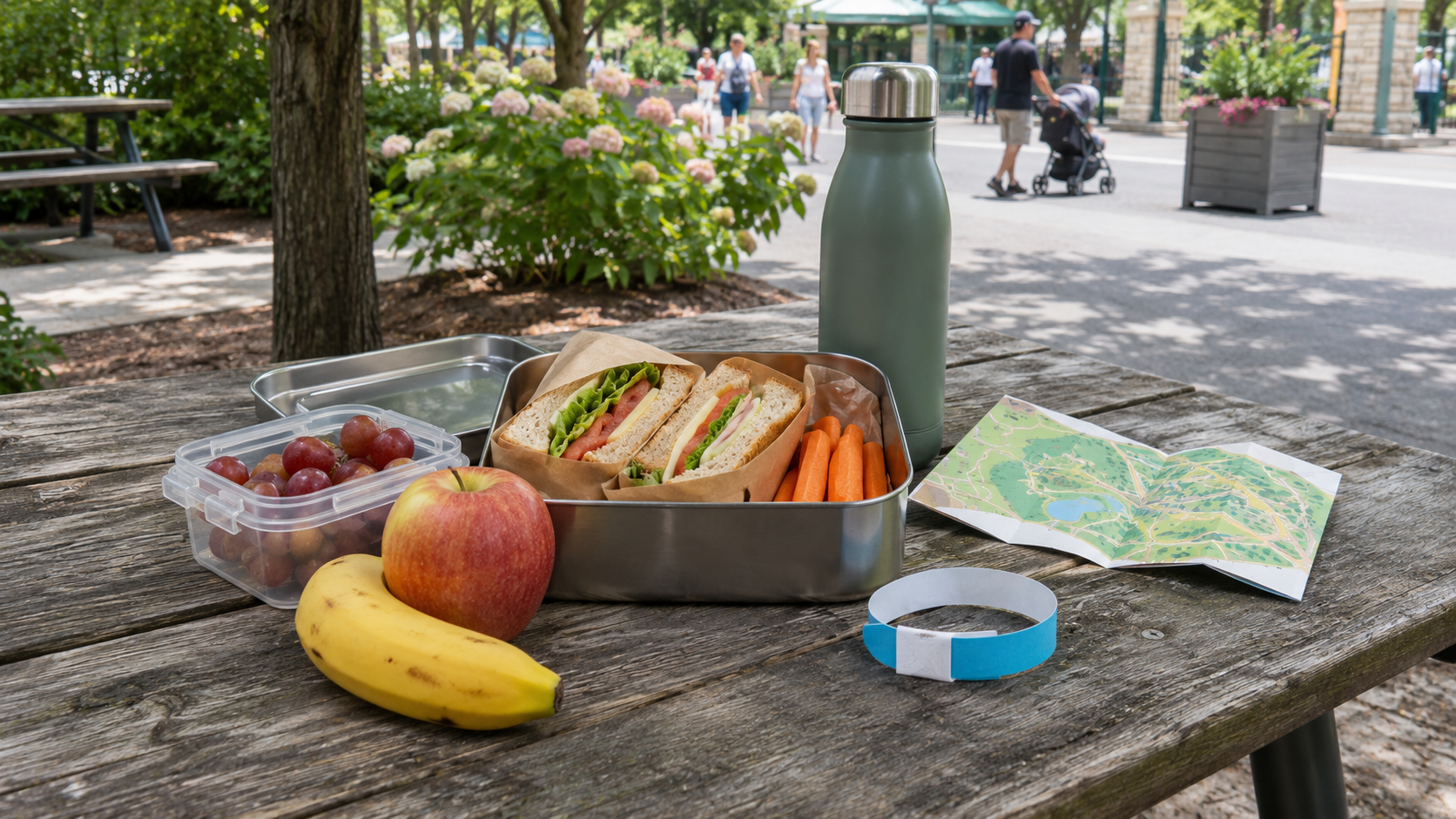
Bringing sandwiches, fruit and a refillable water bottle to a theme park can seem like an obvious way to control spending. Buying a meal inside the park is another expense on an already busy day, so packing lunch feels like the sensible alternative.
Yet saving money is not quite as simple as comparing a homemade sandwich with a restaurant meal. What visitors are allowed to bring, where they can eat it, how the food must be stored and whether leaving the park is necessary can all change the decision.
Official policies from parks in Asia, North America and Europe reveal remarkably different approaches to outside food.
The rules can completely change the equation
Hong Kong Disneyland permits guests to bring food and drinks for personal consumption, provided the items do not require heating, refrigeration, processing or temperature control, and do not have strong odors. Its guidance also makes clear that staff cannot store, prepare or reheat food supplied by guests.
This gives visitors considerable flexibility when planning a simple lunch. However, the rules make it important to choose food that can safely be carried and eaten without special preparation.
Tokyo Disney Resort takes a different approach. Guests are requested not to eat their own meals inside Tokyo Disneyland or Tokyo DisneySea. Instead, designated picnic areas are available outside the parks.
The official guidance allows visitors to carry their packed meals in bags and explains that guests who leave to eat outside should inform a cast member if they intend to return later the same day. There are exceptions for people with dietary limitations, including certain food allergies, and for infants requiring baby food.
For travellers, this distinction matters. A packed lunch may reduce direct food spending, but eating it can require a break outside the park rather than a convenient stop between attractions.
Bringing food is not always permitted
At Universal Orlando Resort in Florida, the published policy generally prohibits outside food and drinks, with defined exceptions. These include bottled water up to two litres per guest, food required for medical reasons or special diets, and baby food or formula. Accepted food must not require heating or refrigeration.
Visitors should not assume they can carry an ordinary family picnic into Universal simply because other destinations allow one. The type of food and the reason for bringing it matter.
European parks offer useful contrasts. Efteling in the Netherlands allows visitors to bring their own food and drinks and use designated picnic areas, while prohibiting consumption of outside food in its restaurants and on their terraces.
Disneyland Paris provides a picnic area between its parking facilities and park entrances. Large group picnics requiring cool boxes, folding tables, stoves or bulky containers are prohibited inside the parks. Its regulations do not amount to a blanket prohibition on every small personal food item.
These examples demonstrate why checking the individual park’s policy is more useful than relying on a general assumption about theme parks.
What does a packed lunch actually save?
The financial advantage depends on what guests prepare and what they would otherwise buy.
A basic lunch made using groceries already at home may be economical, particularly for families sharing ingredients across several portions. But purchasing convenience foods, individual drinks, extra packaging or supplies specifically for one visit may reduce that advantage.
Food waste is another consideration. Buying ingredients that cannot be used afterwards means the full grocery expenditure should be considered, rather than counting only the food actually eaten at the park.
The comparison also needs to be fair. A simple packed sandwich should not automatically be compared with a full-service themed restaurant experience if the realistic alternative would have been a small takeaway meal.
There is also a practical cost that is not measured directly in money: time. Leaving a park to eat, walking back to the entrance and following re-entry procedures can consume part of the day. For visitors prioritising rides or scheduled shows, convenience may outweigh a modest saving.
Food safety can limit the options
A packed lunch is only useful if it remains safe to eat.
FoodSafety.gov recommends keeping perishable foods chilled using appropriate cold sources. Its guidance warns against leaving vulnerable foods at room temperature for extended periods, particularly in hot conditions.
This creates a genuine planning challenge when a park restricts coolers or the visitor will be carrying a bag outdoors for much of the day. Perishable sandwiches, salads and other chilled preparations need suitable storage, not merely a container with a secure lid.
Choosing foods that do not require refrigeration can make the process simpler, provided their storage instructions are followed. Travellers with allergies or medical dietary needs should also check the park’s specific exemptions and restaurant guidance rather than assuming standard admission rules apply to every situation.
The smartest approach may be to mix both options
Visitors do not necessarily need to choose between bringing every meal and buying everything inside the park.
A refillable bottle and suitable snacks can help reduce incidental purchases, while an on-site lunch may offer convenience. Where picnics are permitted and accessible, preparing a complete meal may make more sense, especially for larger groups.
Before travelling, check the official food policy, the location of designated eating areas, any re-entry requirements and whether the planned food can be stored safely. Consider the length of the visit and whether eating at a themed restaurant is itself part of the experience.
Packing lunch can be an effective money-saving strategy, but it is not automatically the most economical or enjoyable choice. The best option balances actual spending, park restrictions, food safety and the value of the time available for the visit.