A theme park lunch rush can make the menu feel remarkably predictable: burgers, fries, pizza, hot dogs, repeat. Those foods are prominent for understandable reasons. Yet the bigger story is not that amusement parks have no culinary imagination. It is how they balance huge bursts of demand with familiar choices, limited kitchen space and, increasingly, food that belongs to the world guests have come to explore.
The lunch rush shapes the menu
A restaurant in a theme park faces an unusual rhythm. Guests may spend hours moving between rides, but many stop for lunch within a relatively narrow window. Food-service technology company Innovorder identifies the midday rush as a major operational pressure: orders arrive together, queues form, and kitchen output has to keep pace with the tills.
A compact menu helps manage that pressure. Fewer options can shorten decision-making, simplify staff training and let kitchens repeat established preparation steps. The reasoning is practical rather than a universal rule: a full-service restaurant and a small outdoor kiosk have different capabilities and customers.
Specialists interviewed by the Foodservice Consultants Society International describe another piece of the system. Some parks prepare substantial quantities in central kitchens and send food to outlets around the property, avoiding the need for large production spaces at every counter. Recipes must work with that distribution model as well as with guests' expectations.
Why the familiar foods keep winning space
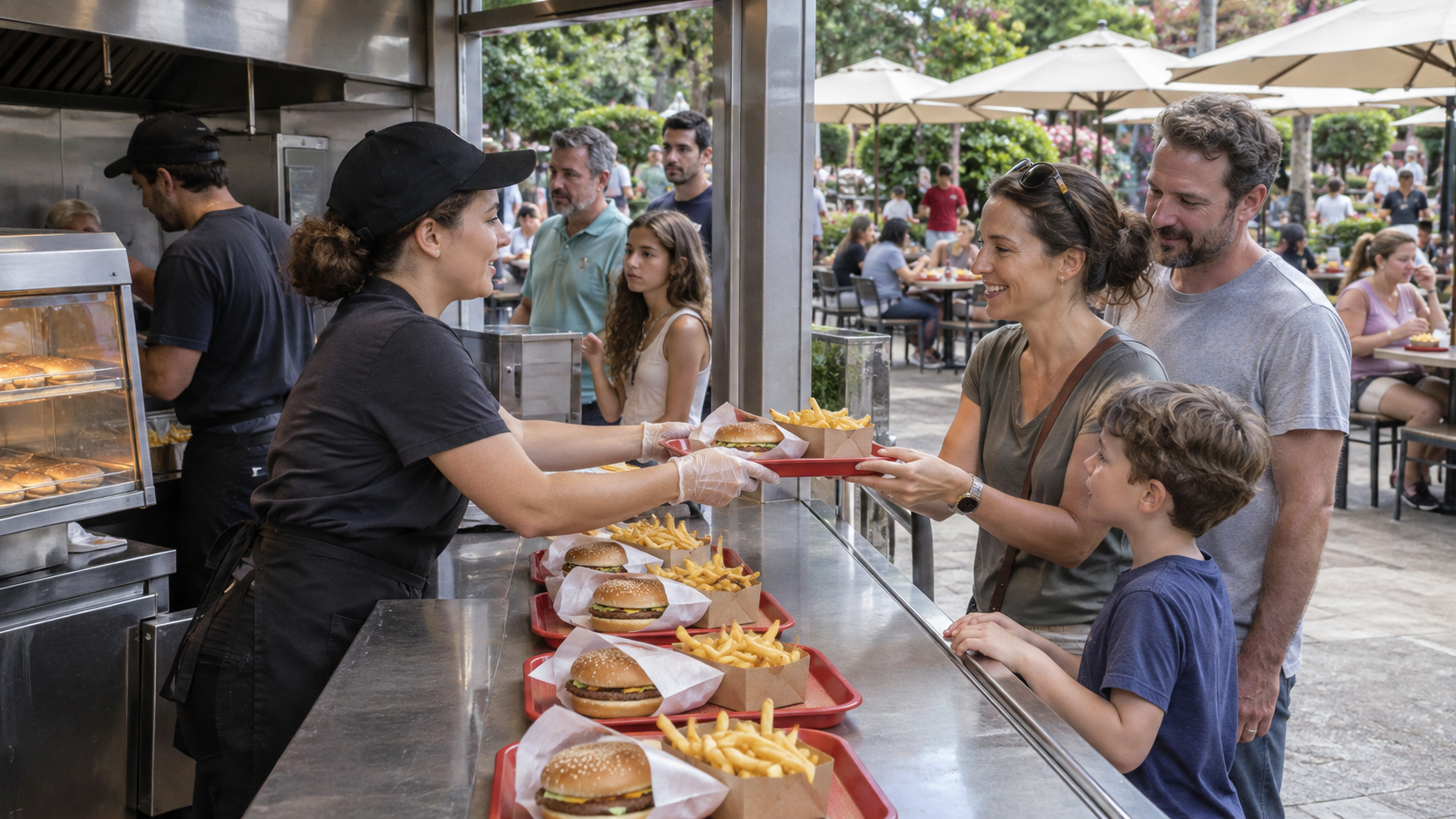
There is a reason fries and burgers are easy to spot. They are recognisable, relatively straightforward to order and suited to quick-service formats. A family trying to make it to its next attraction may prioritise a predictable meal over a lengthy sit-down experience.
Operators have said as much. In interviews published by industry magazine InterPark, parks described choosing shorter menus to make ordering easier while offering foods they knew their guests liked. The article also showed that operators were already thinking about healthier choices and dietary restrictions, rather than simply assuming every visitor wanted fried food.
Food is also a business within the park, and its performance matters. That can encourage items that are consistent to prepare and easy to sell. But reducing every menu decision to profit misses other considerations, from staffing and storage to the differences between day visitors and guests staying for several nights.
Local food can be part of the attraction
Official restaurant listings reveal how much the picture changes between destinations. At Tokyo Disneyland, Restaurant Hokusai serves Japanese cuisine within World Bazaar, while other outlets offer the familiar convenience of quick-service dining. Japan's park does not require everyone to eat the same kind of lunch.
At [Hong Kong Disneyland](/en/parks/hong-kong-disneyland), River View Cafe lists Southeast Asian and local Hong Kong dishes, and the resort identifies dining options for several dietary needs. Its official guidance also identifies particular halal-certified locations, a reminder that being able to eat comfortably involves more than choosing between chicken and beef.
In Florida, [Universal Studios Florida](/en/parks/universal-studios-florida) uses food to support its fictional settings. The Leaky Cauldron, in The Wizarding World of Harry Potter, lists British dishes including bangers and mash, fisherman's pie and vegan chicken curry. Another Universal Orlando restaurant, Mythos at Islands of Adventure, describes a menu ranging from Greek salad to pad Thai and burgers. These are examples of different approaches within one destination, not evidence that every counter has a broad menu.
There is an alternative to the burger-or-nothing choice
The same contrast appears in Europe. [Europa-Park](/en/parks/europa-park) in Germany lists Greek dishes, Alpine cooking, pizza and vegan snacks across its themed areas. [Disneyland Paris](/en/parks/disneyland-paris) combines counter-service restaurants with buffets and table-service dining, while also publishing guidance on vegan meals and allergies. The variety can be extensive, but it is not always evenly distributed: one kiosk may specialise in fries while a different restaurant serves a full meal.
Theme-park cuisine also faces a design question that ordinary fast food rarely does. Food can reinforce a fantasy setting or introduce a regional flavour. The FCSI industry report describes chefs and designers planning restaurants around fictional worlds, alongside the equally real challenge of getting large numbers of people served efficiently.
Technology changes the queue, not the whole diet
Mobile ordering is one response to the rush. Universal Orlando promotes app-based ordering at selected restaurants, and Tokyo Disney Resort identifies outlets where Disney Mobile Order is available. These systems can change when and where customers place an order, but they do not, by themselves, guarantee a more varied or nutritious menu.
Visitors who want something beyond classic fast food can make a more informed choice before getting hungry. Check the park's complete official restaurant directory, compare counter service with table service, and look at the actual dishes rather than the restaurant name. Book ahead where the venue recommends it. For allergies or strict dietary requirements, use the resort's official guidance and speak with staff; menu labels alone may not address cross-contact risks.
Burgers and fries remain an efficient answer to a busy park day. They are simply not the whole answer. The most useful question is not why every park serves the same food, but where each park has made room for something different.